
The Reel Review
When residents of Great Britain come under nuclear attack, their reactions vary, from the few who are physically and psychologically prepared, to the many who find themselves in a chaotic loss at what to do. Writer/director Terry Winnan, owner of a company that sells surveillance equipment and nuclear bunker air filters, tells his story in a three-part anthology.
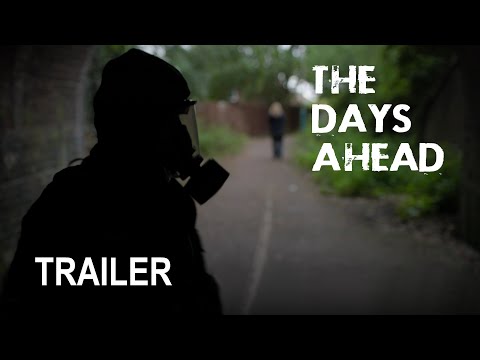
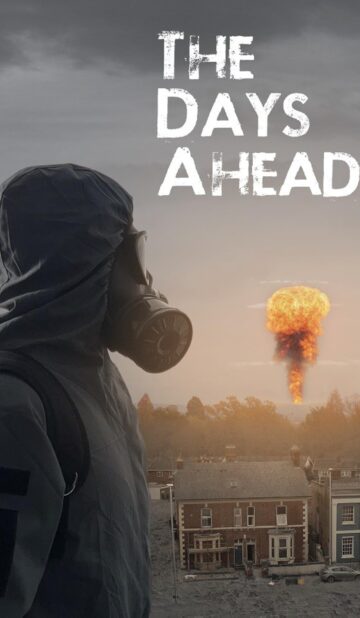
The Days Ahead is an informative yet gloomy concept – a nuclear attack as seen through the eyes of everyday characters with varying degrees of preparedness. The first act focuses on employees, woefully unprepared and stranded in their workplace; the second, a well-prepared family dealing with intruders attempting to take their food and supplies; and third, a prepper who, despite his meticulous planning, didn’t count on the profound loneliness of lengthy isolation.

As expected, the acting in this very low budget thriller ranges from mediocre to dreadfully awful, with plot twists and weird flashbacks shoehorned into the narrative to create unnecessary melodrama, which is odd since the film’s subject matter is plenty dramatic. The film itself falls short as a thorough, instructional “how-to-survive-a-nuclear-blast” type of film. Even so, this very average drama is a mercifully brief, hour-and-15-minute reminder of some very basic “to dos” and “not-to-dos” in the event of a nuclear attack, which raises its otherwise low rating considerably.
REEL FACTS
• If you survive the initial blast of a nuclear attack, it is critical to stay indoors for at least 24 hours (preferably in a room with no windows if possible), sealing up openings into your location and turning off air conditioning/heating that would pull-in air contaminated with nuclear fallout.
• The highest concentration of nuclear fallout from a blast occurs during the first 24 hours. Per the 7-10 Rule, for every sevenfold increase in time after detonation, there is a tenfold decrease in radiation. This Quick Reference Guide from the U.S. Department of Homeland Security has more detailed information.
• Essentials for surviving a nuclear attack: a thorough first aid kit, a gas mask (or at a minimum, an N95 mask), one gallon of bottled water per person per day, a flashlight with an ample supply of batteries, duct tape for creating those air-tight seals from the outside, canned food, a geiger counter to measure radiation and dosimeter card to interpret the results, and a hand-crank radio for receiving important emergency updates.
Video & Photo