

The Reel Review
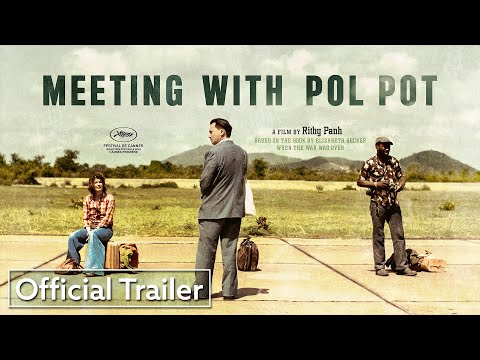
Three French journalists are invited to Cambodia in 1978 to interview Khmer Rouge leader Pol Pot, gradually rebelling against the artificial, carefully staged environment he wants them to see, to ultimately become aware of the mass starvation and genocide that has been occurring. Irène Jacob, Grégoire Colin and Cyril Gueï star in this historical drama loosely based on American journalist Elizabeth Becker’s own 1978 trip.

Writer/director Rithy Panh, who escaped to Thailand as a child after the Khmer Rouge slaughtered his entire family, incorporates well done period production design with actual real-life footage from the period to capture the famine, genocide and eerie abandonment of the nation’s capital, Phnom Penh. Less effective are the wooden figurine dioramas also used in Panh’s 2013 documentary to reenact other scenes. Despite their impressive, intricate detail, the dioramas unfortunately pull the viewer out of the action.

In the film, each of the three journalists reacts to their incredibly perilous situation differently – ranging from tactless disgust to sycophantic subservience. The murky, understated manner of storytelling and abrupt ending will turn off some viewers, but for most, the juxtaposition of natural beauty with a chilling score and so much horror of humanity will leave a haunting imprint.
REEL FACTS
• Meeting With Pol Pot was Cambodia’s entry for Best International Film for the 2025 Oscars. Rithy Panh’s 2013 avant-garde documentary The Missing Picture was the first Cambodian film ever nominated for an Oscar for Best International Film.

• American journalist Elizabeth Becker, author of “When the War Was Over, A Modern History of Cambodia and the Khmer Rouge,” was one of only three Western journalists who visited Cambodia in 1978 to interview Pol Pot. Scottish academic Malcolm Caldwell, known as an ardent Pol Pot defender, was shot and killed just hours after the three interviewed the communist dictator. Three days later, Vietnam invaded Cambodia and ended the Khmer Rouge rule.
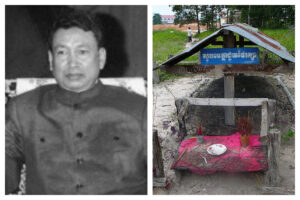
• Pol Pot is widely believed to be one of the most brutal despots in modern history, overseeing the genocide of an estimated 1.5 to 2 million people, a quarter of Cambodia’s pre-genocide population, during his three-year reign of terror in which he advocated for the complete destruction of all cultures and traditions, purged entire cities of their populations and forced citizens to wear the same black clothing and work on collective farms to create an agrarian communist society. Exiled to the jungles near Thailand after his defeat by Vietnam, Pol Pot died in his sleep of a heart attack in April 1998 at the age of 73.
Video & Photo